
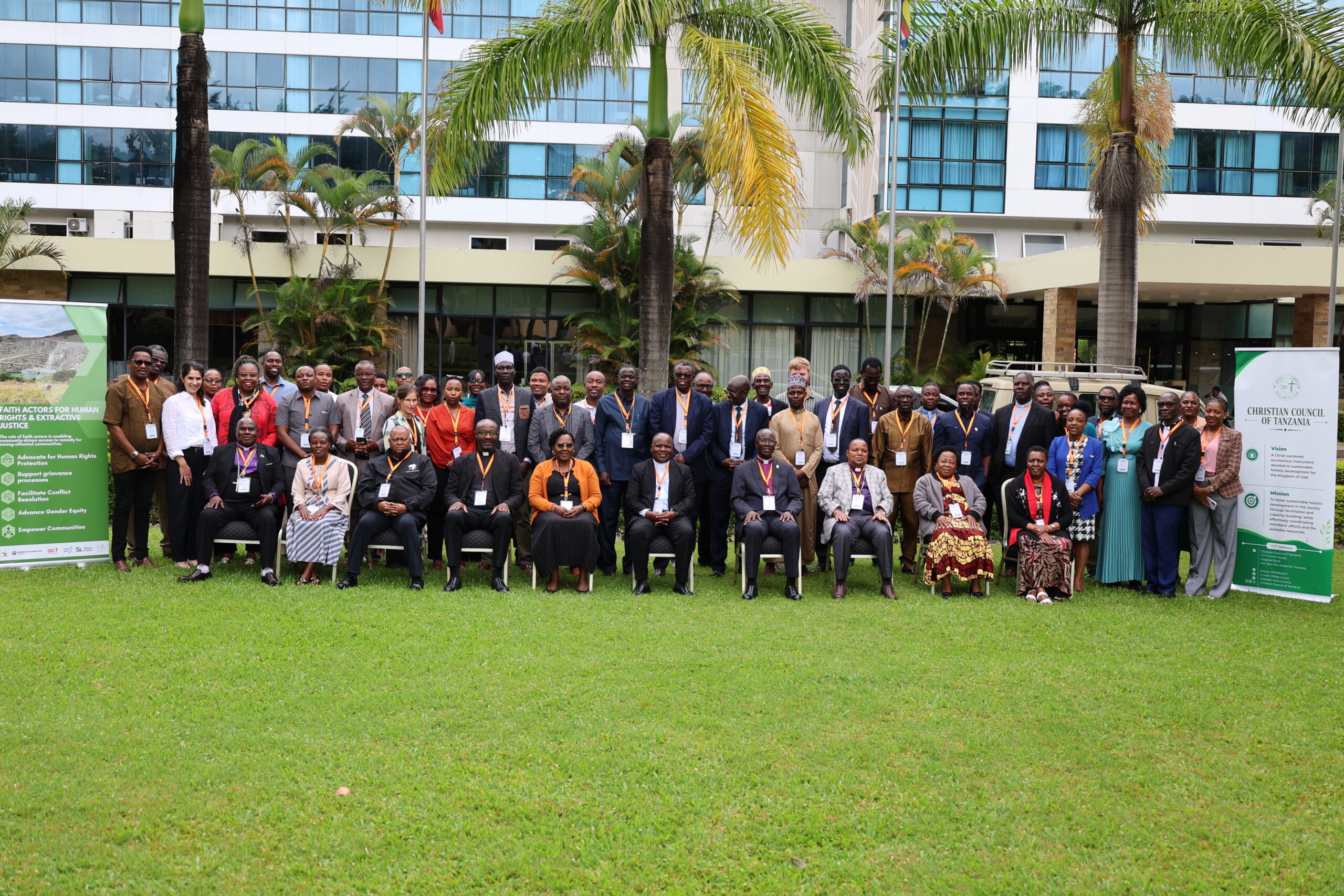
Building a Community-Centred Accountability Ecosystem in Eastern Africa: The Role of Faith Actors
Eastern Africa Exchange Platform on Business and Human Rights and Environment
4–5 June 2026 | Arusha, Tanzania
Preamble
We, the General Secretaries and representatives of National Councils of Churches and Churches in the Great Lakes and Horn of Africa under the auspices of the Fellowship of Christian Councils and Churches in the Great Lakes and Horn of Africa (FECCLAHA), faith actors under the auspices of the Interfaith Standing Committee on Economic Justice and Integrity of Creation (ISCEJIC) in Tanzania, and participants hosted by the Christian Council of Tanzania (CCT);
In partnership with Swedwatch, Act Church of Sweden, Norwegian Church Aid (NCA), and representatives from civil society organizations, legal institutions, trade unions, media, and other actors working on Business, Human Rights and Environment across Eastern Africa;
Having held deliberations in Arusha, Tanzania, during the Eastern Africa Exchange Platform on Business and Human Rights and Environment to exchange experiences, share lessons learned, and strengthen strategies for community participation, grievance raising, accountability, and access to remedy in contexts affected by extractive industries and other business-related human rights and environmental impacts;
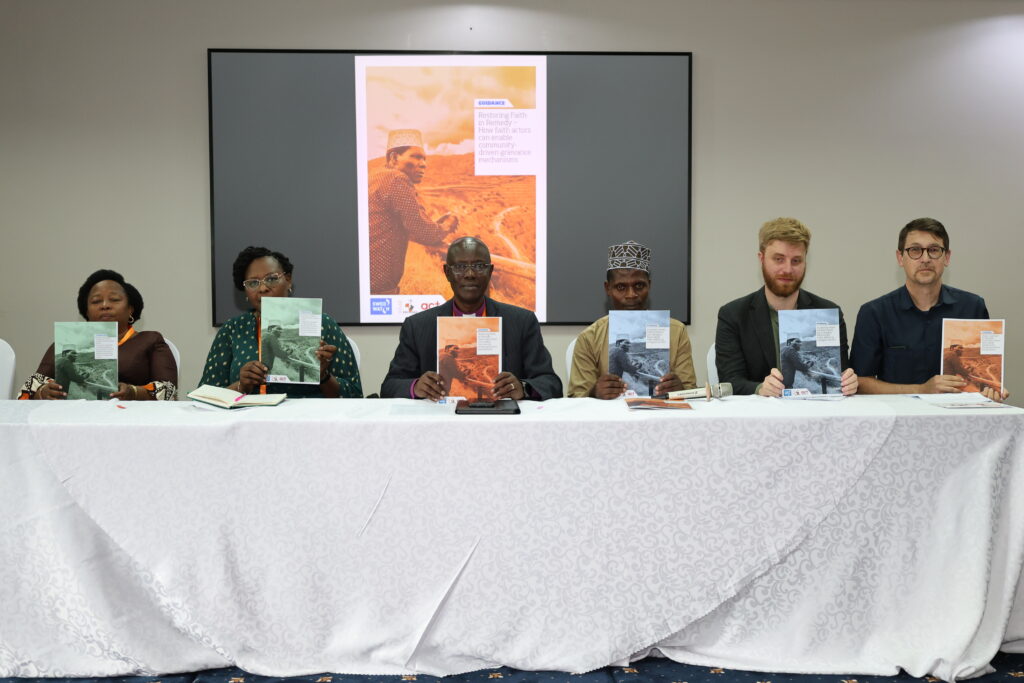
Acknowledging the strategic role of faith actors in accompanying communities, promoting justice, and facilitating access to remedy, as articulated in the Guidance Note “Restoring Faith in Remedy” (May 2026);
Affirming that effective accountability requires collaboration among communities, faith actors, civil society, media, trade unions, legal actors, and other stakeholders;
We hereby adopt the following commitments:
Commitments of Faith Actors
We commit to:
- Strengthen grievance mechanisms and support communities to access justice by adapting, contextualizing, and implementing the Guidance Note “Restoring Faith in Remedy” within our respective countries and communities. It is essential for these tools to be simplified and contextualised so they can be meaningfully engaged with by partners and communities.
- Share experiences, lessons learned, and successful practices across the region, recognizing that many communities face similar barriers to justice and that collective learning strengthens collective action.
- Build upon the unique strengths and trusted position of faith actors to support communities in engaging constructively with, for example, mining companies, businesses, and actors across global value chains.
- Strengthen collaboration and dialogue with other stakeholders and pursue opportunities for both formal and informal collective action.
Commitments of Business, Human Rights and Environment Actors
We commit to:
- Strengthen coordination and collaboration among faith actors, community organizations, civil society, legal actors, trade unions, media, and other stakeholders.
- Recognize and leverage the complementary strengths of different actors to improve accountability and reduce risks faced by communities seeking justice.
- Create and sustain spaces for exchange, learning, information sharing, and mutual support.
- Foster stronger partnerships through formal and informal networks and collaborative initiatives.
- Support joint advocacy efforts where appropriate, including collective statements and coordinated engagement with decision-makers and businesses.
Our Shared Commitments
Together, we commit to building a more accessible, inclusive, community-centred accountability ecosystem across the region by taking forward each of these commitments in our respective countries and regionally:
- Combining our respective expertise and comparative advantages to ensure communities can access the full range of accountability strategies available, including organizing, research, protection, advocacy, legal support, dialogue, and grievance mechanisms.
- Leveraging the trusted presence and deep community connections of faith actors to strengthen community participation and access to remedy.
- Promoting collaboration across sectors and borders to address systemic human rights and environmental harms linked to business activities.
- Supporting community voices and agency in efforts to secure justice, accountability, and sustainable development.
We recognise that accountability comes from multiple strategies employed simultaneously by the multiplicity of actors in the accountability ecosystem.
Declaration
We reaffirm our shared commitment to human dignity, environmental stewardship, justice, peace, and the protection of affected communities.
We pledge to continue working together to strengthen accountability, expand access to remedy, and ensure that communities affected by business-related human rights abuses and environmental harm are not left without support, voice, or pathways to justice.
We pledge to sustain the multi-stakeholder conversations around business and human rights and environment and to share our progress from our respective countries.
Adopted by
Delegates of the Eastern Africa Exchange Platform on Business and Human Rights and Environment
Arusha, Tanzania
5 June 2026