
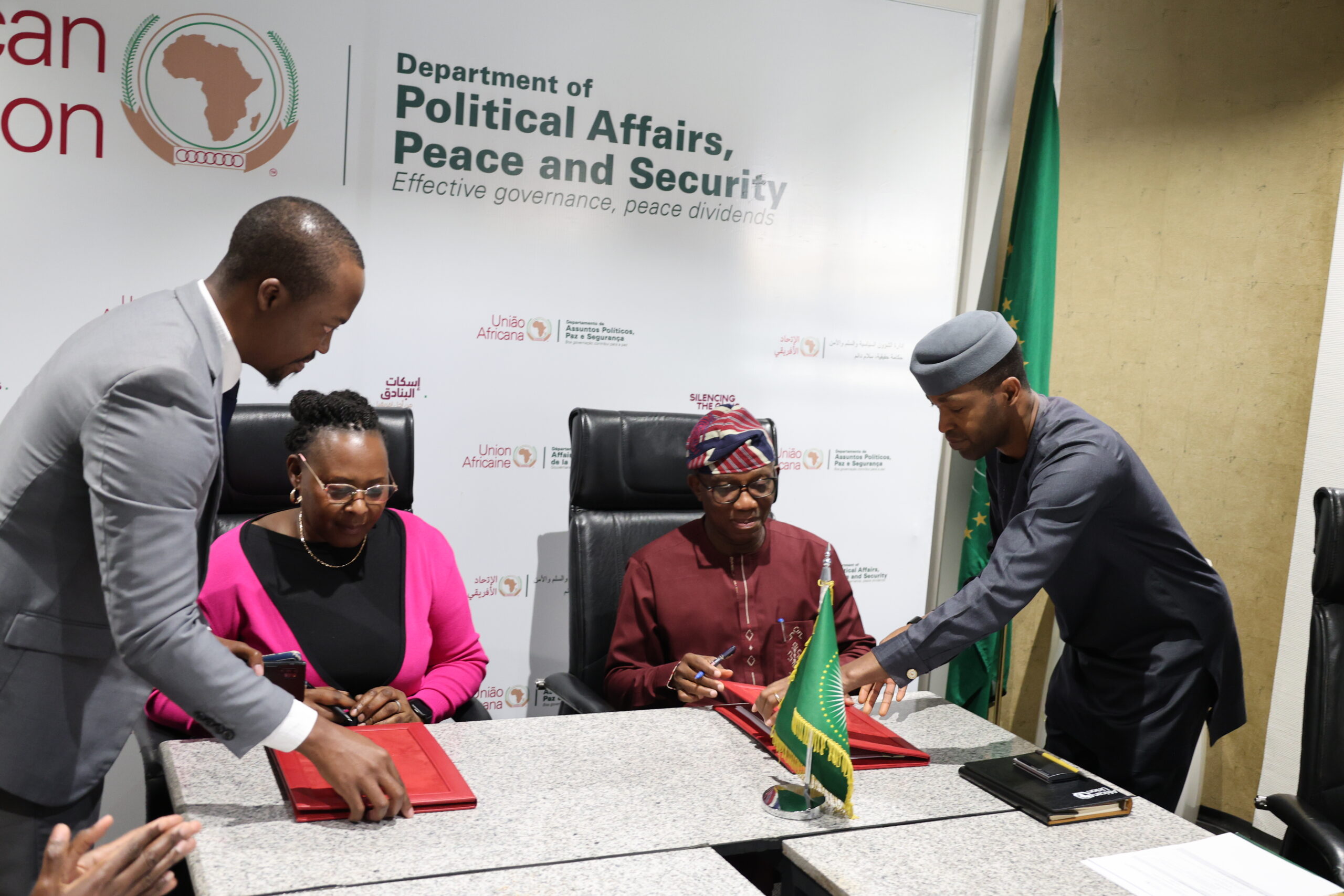
The Regional Faith Women Mediation Network (REFWOMEN), has officially signed a Memorandum of Understanding (MoU) with the African Union (AU), marking a significant milestone in strengthening collaboration for peacebuilding across Africa.
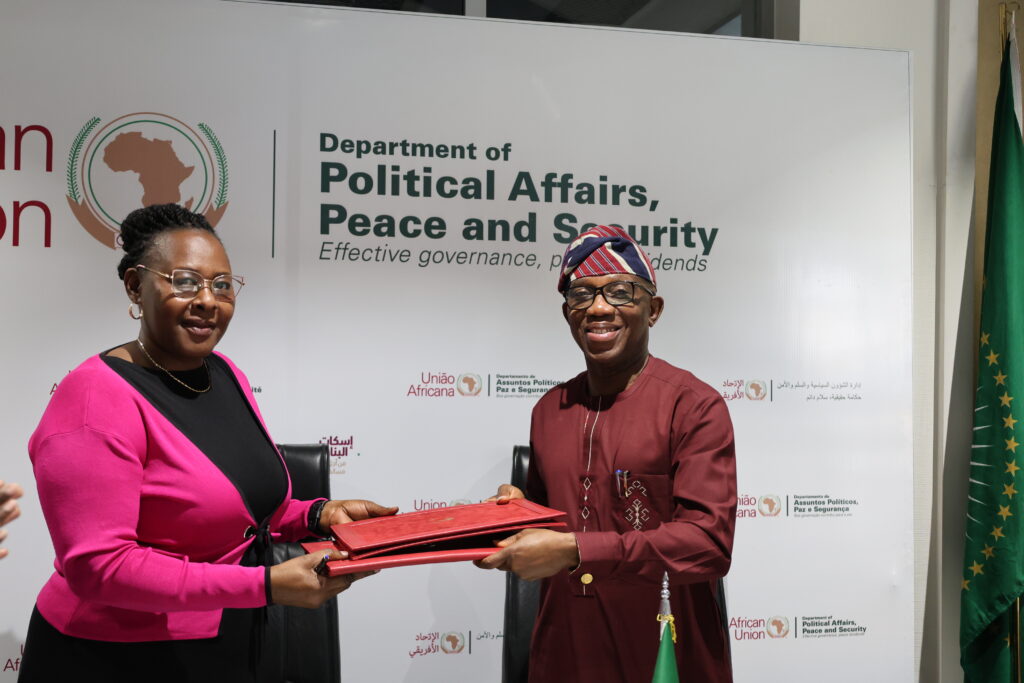 Ms Jeannette Uwizeye (FECCLAHA Executive Director), and H.E Ambassador Bankole Adeoye , Commissioner for Political Affairs, Peace and Security, African Union Commission after signing the MoU
Signed by the Fellowship of Christian Councils and Churches in the Great Lakes and Horn of Africa (FECCLAHA), as the convening institution of REFWOMEN, the partnership marks a major milestone in advancing the network’s mission of strengthening the role of women of faith in mediation, peacebuilding, and conflict prevention across the continent.
Centred on the theme “Building Peace at the Community, National and Regional Levels,” the MoU establishes a framework for cooperation aimed at strengthening inclusive peace processes, enhancing community resilience, and ensuring that underrepresented groups, particularly women and youth, play meaningful roles in peace and security efforts.
The signing ceremony brought together representatives from the African Union, FECCLAHA, the REFWOMEN, the Norwegian Church Aid Advocacy Programme Africa (NAPA), and the International Center for Peace, Human Rights and Development (IPHRD), alongside technical teams who have supported the journey toward this partnership over the past three years.
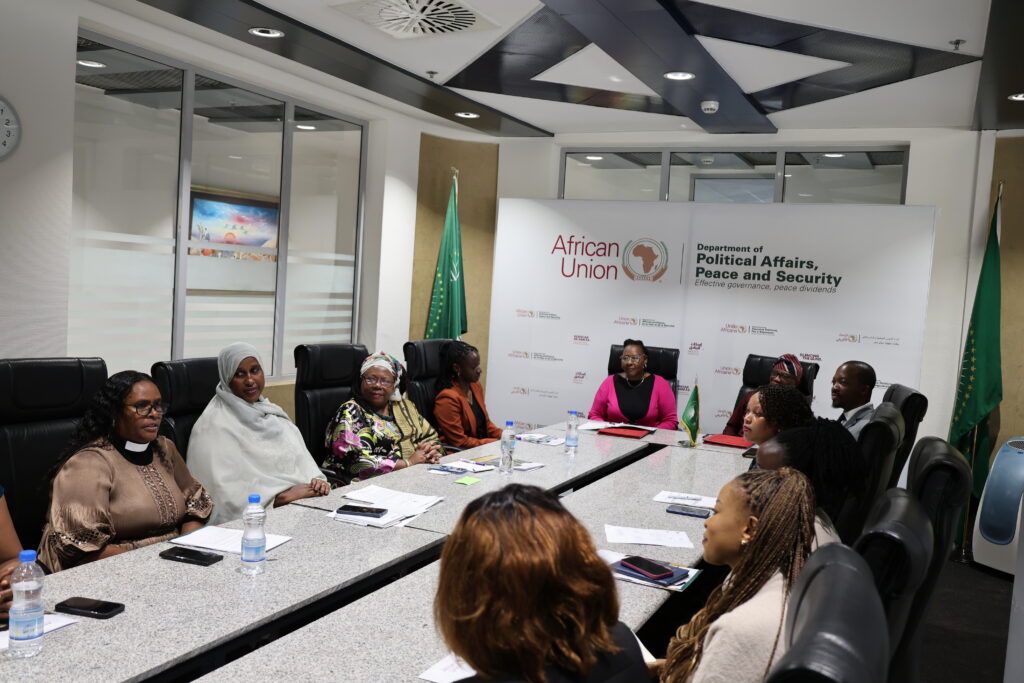 The delegation at the signing ceremony
REFWOMEN has emerged as one of FECCLAHA’s flagship peacebuilding platforms, bringing together women of faith from across the Great Lakes and Horn of Africa to strengthen mediation, leadership, and advocacy in conflict transformation. In a region frequently affected by armed conflict, electoral violence, displacement, violent extremism, and social fragmentation, women often serve as first responders, community stabilizers, and informal mediators, yet remain underrepresented in formal peace processes.
This partnership with the African Union represents a significant step in changing that reality.
Through the MoU, REFWOMEN will contribute to advancing key African Union peace and security priorities, including the Women, Peace and Security (WPS) agenda, the Youth, Peace and Security (YPS) framework, Agenda 2063, and the Silencing the Guns initiative. The collaboration will focus on strengthening women and youth participation in peace processes, supporting community reconciliation and trauma healing, preventing election-related violence, countering violent extremism, and promoting grassroots awareness of African Union peace frameworks.
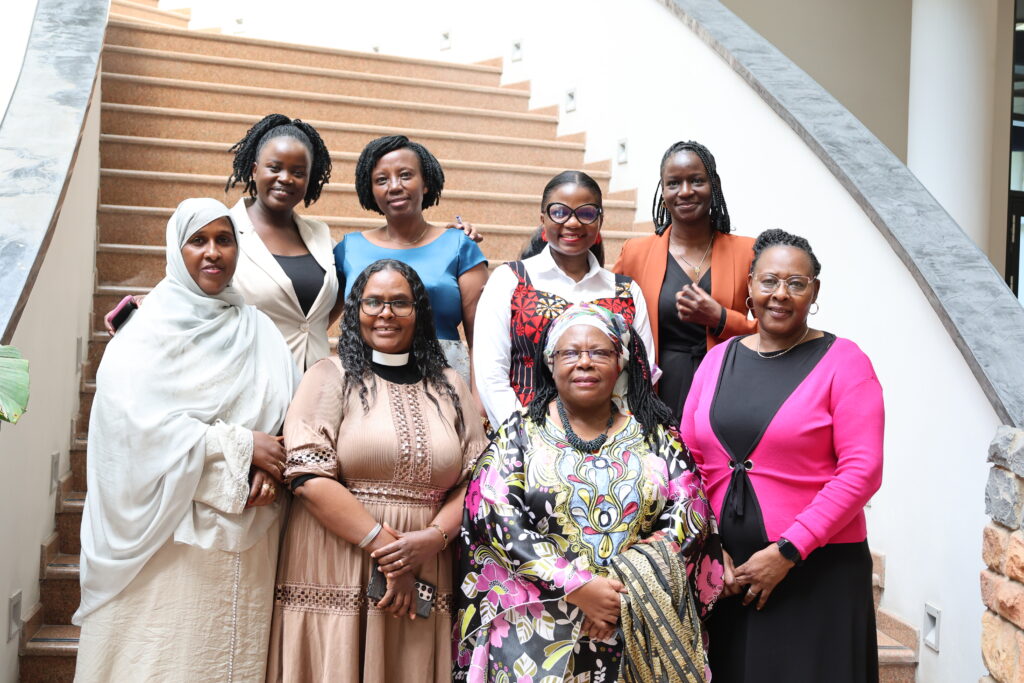 Members of REFWOMEN present during the signing of the MoU
The agreement also recognizes the critical role of faith actors and interfaith collaboration in peacebuilding. Across conflict-affected communities, religious leaders remain among the most trusted voices, often serving as bridges for dialogue, reconciliation, and healing. By strengthening collaboration between continental institutions and faith-based peace actors, the partnership creates stronger pathways for community-centred conflict prevention and sustainable peace.
The signing reflects the culmination of nearly three years of collaboration between FECCLAHA, NAPA, IPHRD, and the African Union, rooted in a shared vision of building stronger bridges between community-led peace efforts and continental peace architecture.
Speaking during the signing, H.E. Amb. Bankole emphasized the deeper meaning of peace and the significance of the partnership.
“A few years ago, someone asked me for my definition of peace. They probably expected a political response, but I gave them a biblical one: peace that surpasses all understanding. That is the peace we should strive for. This marks the beginning of a close partnership between our organizations, and I am pleased to be part of it.”
FECCLAHA Executive Director Jeannette Uwizeye highlighted the strategic importance of placing community actors, especially women of faith, at the centre of peacebuilding.
“Peace cannot remain a policy aspiration alone. It must be experienced in communities, strengthened through institutions, and sustained by collective responsibility. Through REFWOMEN, we are ensuring that women of faith are not merely participants in peace processes but recognized as essential peace architects.”
The REFWOMEN model is already generating interest beyond the Great Lakes and Horn of Africa, with growing linkages and learning exchanges emerging across the continent, including in West Africa, affirming the increasing recognition of women of faith as indispensable actors in peacebuilding.
As implementation begins, this partnership signals a renewed commitment to building peace that is inclusive, community-centred, and sustainable.
Because when women, youth, faith actors, and communities are empowered to lead peace processes, peace becomes more than an aspiration, it becomes a lived reality.
